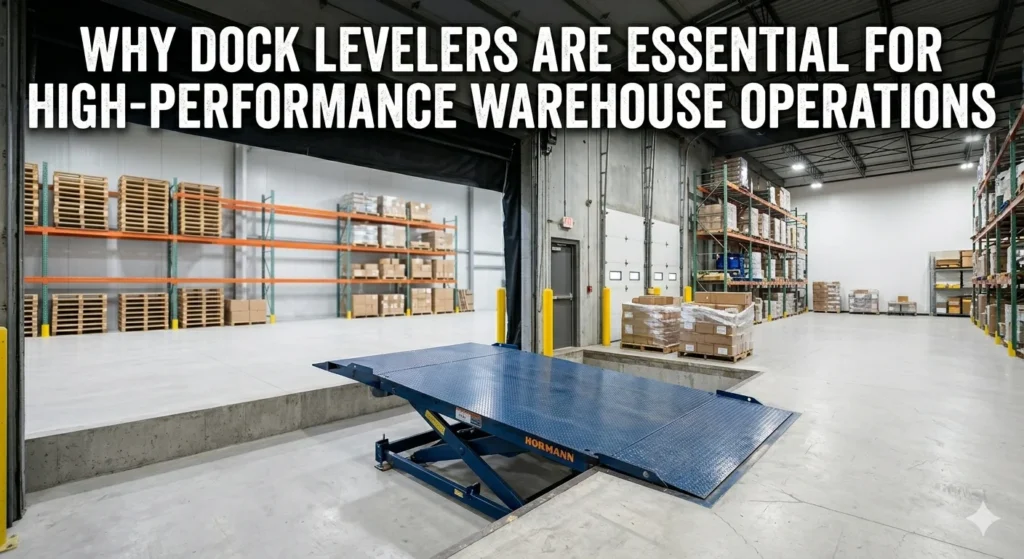
Have you ever wondered why modern warehouses prioritize dock levelers as a critical part of their loading infrastructure? In today’s fast-moving logistics and supply chain industry, efficiency, safety, and productivity are more important than ever. Warehouses that handle large volumes of goods need equipment that can streamline operations while minimizing risks. This is where dock levelers play a vital role.
A dock levelers acts as a bridge between a warehouse loading dock and a truck or trailer. By creating a smooth and stable connection, it allows forklifts, pallet jacks, and workers to move goods quickly and safely. In countries like Pakistan, where logistics and e-commerce sectors are rapidly growing, installing the right warehouse loading dock equipment can significantly improve operational performance.
What Is a Dock Leveler?
A dock leveler is a mechanical or hydraulic platform installed at the loading dock of a warehouse. Its main function is to compensate for the height difference between the dock floor and the truck bed.
Without a dock leveler, loading and unloading goods becomes inefficient and potentially dangerous. Uneven surfaces can lead to accidents, product damage, and unnecessary delays.
Dock levelers are commonly used in:
- Warehouses
- Distribution centers
- Manufacturing facilities
- Logistics hubs
- Cold storage facilities
These environments depend heavily on smooth and continuous loading operations.
Why Dock Levelers Matter in Warehouse Operations
1. Improved Loading and Unloading Efficiency
One of the biggest advantages of dock levelers is operational efficiency. When the dock and truck bed are aligned properly, workers can move goods faster without interruptions.
Benefits include:
- Faster loading and unloading times
- Reduced waiting time for trucks
- Higher productivity for warehouse staff
For businesses managing large inventories, this efficiency directly impacts profitability.
2. Enhanced Workplace Safety
Safety is a top priority in any warehouse environment. Uneven gaps between docks and trucks can create serious hazards for workers operating forklifts or handling heavy goods.
Dock levelers help by:
- Eliminating dangerous height gaps
- Providing stable movement for forklifts
- Reducing the risk of worker injuries
According to safety experts, properly installed loading dock systems significantly reduce workplace accidents.
3. Protection for Goods and Equipment
When goods are transported across unstable surfaces, there is a high risk of product damage. Broken packaging, dropped pallets, and forklift instability can all lead to costly losses.
A high-quality dock leveler provides:
- Smooth surface transitions
- Better weight distribution
- Protection for fragile cargo
This is particularly important for warehouses handling electronics, pharmaceuticals, and packaged food products.
Types of Dock Levelers Used in Modern Warehouses
Different warehouse environments require different types of dock levelers. The most commonly used types include:
Hydraulic Dock Levelers
Hydraulic dock levelers are widely used in large distribution centers because they offer automation and smooth operation.
Key features:
- Push-button operation
- Minimal manual effort
- High durability
These are ideal for high-volume warehouse operations.
Mechanical Dock Levelers
Mechanical dock levelers use springs and manual operation to adjust the dock height.
Advantages include:
- Lower installation cost
- Simple design
- Reliable performance
They are often used in small to medium warehouses.
Air-Powered Dock Levelers
These dock levelers use compressed air systems to adjust the platform height.
Benefits:
- Smooth lifting mechanism
- Lower maintenance compared to mechanical systems
- Energy-efficient operation
Growing Demand for Dock Levelers in Pakistan
The logistics sector in Pakistan has expanded significantly due to the growth of e-commerce, retail distribution, and manufacturing industries. Cities such as Karachi, Lahore, and Islamabad are seeing increased demand for modern warehouse infrastructure.
Businesses are investing in dock levelers and loading dock equipment to:
- Improve logistics efficiency
- Reduce operational downtime
- Meet international warehouse standards
For companies aiming to scale their operations, installing professional dock leveler systems is becoming a necessity rather than a luxury.
Key Factors to Consider When Choosing a Dock Leveler
Before installing a dock leveler, businesses should evaluate several factors to ensure they choose the right system.
1. Load Capacity
The dock leveler must support the maximum weight of forklifts and cargo being handled.
2. Frequency of Use
High-traffic warehouses require heavy-duty hydraulic dock levelers.
3. Dock Height and Truck Variation
Warehouses that handle multiple truck types need adjustable dock levelers.
4. Maintenance Requirements
Choose equipment that offers durability and easy servicing.
Selecting the right dock leveler ensures long-term operational efficiency and cost savings.
Conclusion
Dock levelers have become an essential component of modern warehouse operations. They provide a safe, efficient, and reliable bridge between loading docks and trucks, allowing businesses to streamline their logistics processes.
For warehouses in Pakistan, investing in high-quality dock levelers and loading dock equipment can significantly improve productivity, protect workers, and reduce product damage. As supply chains continue to grow more complex, having the right infrastructure in place is critical for maintaining smooth and high-performance operations.
FAQs
1. What is the main purpose of a dock leveler?
A dock leveler bridges the gap between a warehouse dock and a truck, allowing safe and efficient loading and unloading of goods.
2. Are dock levelers necessary for small warehouses?
Yes. Even smaller warehouses benefit from dock levelers because they improve safety and reduce manual effort during loading operations.
3. What is the best type of dock leveler?
Hydraulic dock levelers are often considered the best option for high-volume warehouses due to their automation and durability.
4. How much weight can a dock leveler support?
Most dock levelers support loads ranging from 6,000 kg to over 15,000 kg, depending on the model and design.
5. Do dock levelers require regular maintenance?
Yes. Regular inspection and maintenance help ensure safety, smooth operation, and longer equipment lifespan.
Call to Action
If you are planning to upgrade your warehouse infrastructure in Pakistan, installing a reliable dock leveler system can dramatically improve your logistics efficiency and workplace safety. Modern loading dock solutions help businesses handle heavy cargo, reduce loading delays, and maintain smooth warehouse operations.
To ensure long-term performance and reliability, it’s important to choose equipment from trusted industrial solution providers. Companies like Techno‑Inn Dock Leveler Solutions offer high-quality dock levelers, professional installation, and customized solutions designed for warehouses, factories, and logistics facilities across Pakistan. Their systems help create a stable bridge between trucks and loading docks, improving productivity while minimizing operational risks.