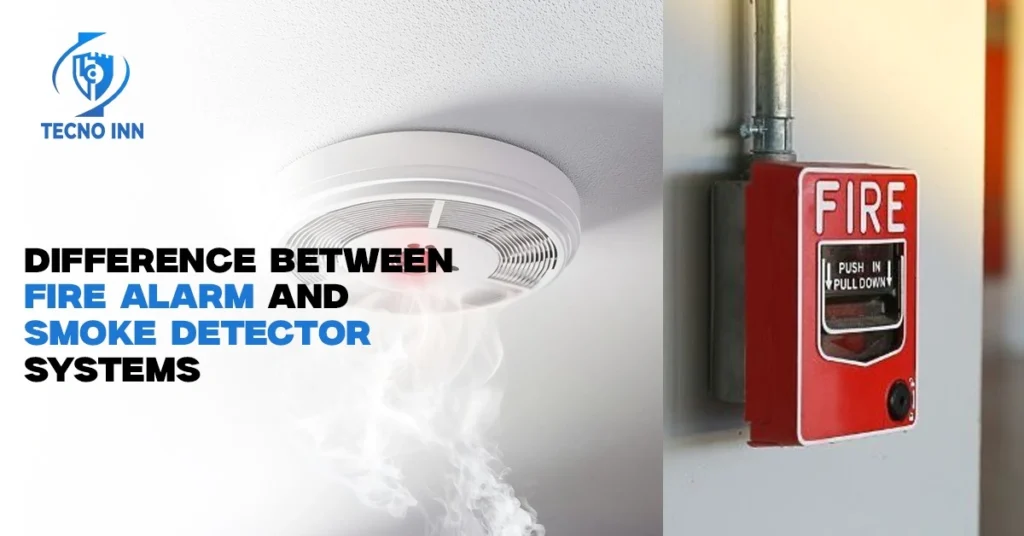
Ever Wondered What Sets a Fire Alarm Apart from a Smoke Detector?
When it comes to safety, every second counts. In Pakistan, where residential and commercial buildings are growing rapidly, having a reliable fire safety system isn’t just smart; it’s essential.
But here’s where many people get confused: What’s the difference between a fire alarm and a smoke detector system? Aren’t they the same thing?
Not quite. While both work to protect lives and property from fire hazards, they serve different purposes and function in unique ways. Understanding the difference helps you choose the right system for your building, whether it’s a home, office, factory, or hospital.
Let’s break it down simply.
What Is a Smoke Detector?
A smoke detector is a device that senses smoke, often the first sign of a potential fire. It’s designed to detect particles in the air and trigger a local alarm or signal.
How It Works
There are two main types of smoke detectors:
- Ionization Smoke Detectors:
- Detect fast-burning fires with visible flames.
- Work by sensing changes in air ionization caused by smoke particles.
- Photoelectric Smoke Detectors:
- Detect slow, smoldering fires that produce a lot of smoke.
- Use a light beam — when smoke disrupts it, the alarm sounds.
Some advanced models combine both types for better accuracy.
Where They’re Commonly Used
- Homes and apartments
- Hotel rooms
- Small offices or shops
- Residential complexes
In Pakistan, smoke detectors are now often required in apartment buildings and commercial spaces under fire safety regulations.
What Is a Fire Alarm System?
A fire alarm system is a complete setup that not only detects smoke or fire but also alerts occupants and emergency teams.
Think of it as the bigger system that includes smoke detectors, heat sensors, control panels, sirens, and sometimes sprinklers, all working together to manage fire emergencies effectively.
Key Components of a Fire Alarm System:
- Smoke & heat detectors (for detection)
- Manual call points (for manual activation)
- Control panel (the system’s “brain”)
- Sounders or sirens (for alerts)
- Emergency lighting and notifications
- Integration with fire suppression systems
When any sensor detects smoke or heat, the system automatically triggers alarms and may even alert the local fire department, depending on configuration.
Main Differences Between Fire Alarm and Smoke Detector Systems
| Feature | Smoke Detector | Fire Alarm System |
| Purpose | Detects smoke only | Detects and alerts about fire, smoke, or heat |
| Coverage | Single room or small area | Entire building or facility |
| Components | Single sensor or device | Multiple interconnected devices |
| Response | Triggers local alarm | Activates alarms, notifies occupants, may alert authorities |
| Maintenance | Basic cleaning and testing | Requires professional maintenance |
| Installation Cost | Low | Moderate to high (depends on scale) |
In short:
- Smoke detectors act as sensors.
- Fire alarm systems act as command centers.
Which One Do You Need?
The right choice depends on your space and safety requirements.
For Homes or Small Offices:
A few strategically placed smoke detectors may be enough to detect early signs of fire and alert occupants to evacuate.
For Commercial Buildings, Factories, or Warehouses:
A fire alarm system is essential. It offers full coverage, quick response, and integration with other safety tools like sprinklers, access control, or emergency lighting.
In Pakistan, regulatory bodies often require fire alarm systems in:
- Shopping malls
- Hotels and hospitals
- Schools and universities
- Industrial and government buildings
Benefits of Installing a Fire Safety System
No matter which system you choose, the benefits are undeniable:
- Early detection saves lives
- Reduces property damage
- Helps ensure legal compliance
- Builds trust and safety confidence for employees and residents
A properly installed system by a certified security company ensures reliability and faster emergency response.
Fire Safety Systems in Pakistan – The Growing Need
With rising urban density and frequent electrical short circuits, fire safety awareness in Pakistan is growing fast.
Leading cities like Lahore, Karachi, and Islamabad are seeing increased demand for modern fire alarm systems, especially in industrial and commercial zones.
Companies like Techno inn are at the forefront of this shift, providing customized fire detection and alarm systems designed for Pakistan’s conditions, from large factories to small offices.
These systems use internationally certified components, ensuring compliance with NFPA and local fire safety standards.
Conclusion
While both systems aim to protect lives, the difference between a fire alarm and a smoke detector lies in scope and response.
- A smoke detector senses smoke and triggers a basic alert.
- A fire alarm system takes full control, detecting, alerting, and managing emergencies.
For complete protection and compliance, especially in commercial or industrial sites, a fire alarm system is the smarter, long-term investment.
Don’t wait for a fire to remind you about safety, act today.
FAQs
- Can a smoke detector work without a fire alarm system?
Yes. Smoke detectors can operate independently, but they only alert locally. - Are fire alarm systems mandatory in Pakistan?
Yes, for commercial and public buildings under local fire safety laws. - How often should these systems be maintained?
Smoke detectors should be tested monthly, and fire alarm systems inspected at least once a year. - Can both systems work together?
Yes. Smoke detectors are part of fire alarm systems — they work together for full protection. - Which company provides reliable fire safety systems in Pakistan?
Technoinn offers advanced, certified fire alarm and smoke detection systems tailored for Pakistan’s environment.
Want to make your building fire-safe?
Visit technoinn.net to explore reliable fire alarm and smoke detection systems trusted by top organizations across Pakistan.