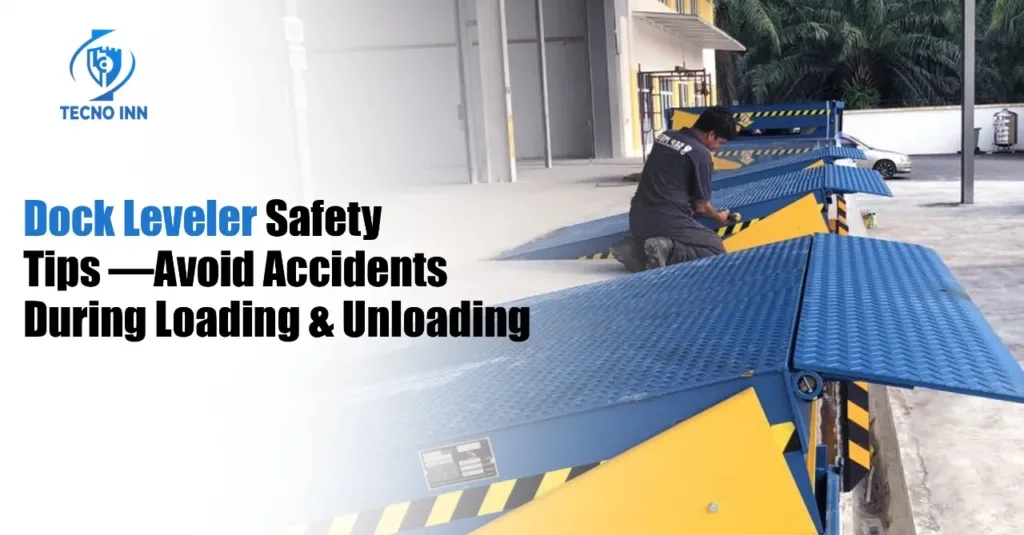
Loading and unloading areas are some of the busiest and most dangerous zones in warehouses, factories, and logistics centers. Every day, forklifts, trucks, and workers move heavy loads across dock levelers, and a single mistake can cause serious injury or equipment damage.
In Pakistan, where industrial activity and logistics operations are growing rapidly, dock leveler safety has become more important than ever. With the right precautions and maintenance, you can create a safer, smoother, and more efficient working environment.
In this blog, you’ll learn practical dock leveler safety tips to help prevent accidents during loading and unloading, whether you manage a warehouse, manufacturing unit, or distribution center.
What Is a Dock Leveler?
A dock leveler is a platform that bridges the gap between a loading dock and a truck. It allows forklifts and trolleys to move safely between the two, even when there’s a height difference.
Dock levelers come in different types, hydraulic, mechanical, and air-powered, but their goal is the same: to make loading and unloading safe, fast, and efficient.
However, if a dock leveler isn’t used properly or maintained regularly, it can lead to dangerous situations, such as slips, falls, tipping forklifts, or damaged goods.
Why Dock Leveler Safety Matters
Ignoring dock safety isn’t just risky, it’s costly.
Here’s why it deserves your attention:
- Prevents injuries: Most warehouse accidents happen near docks due to poor coordination or faulty equipment.
- Protects equipment: A sudden collapse or imbalance can damage forklifts, pallets, or truck floors.
- Improves efficiency: A well-maintained dock ensures smooth traffic flow and faster operations.
- Reduces downtime: Regular safety checks prevent unexpected breakdowns that can delay shipments.
Safety is not just compliance, it’s a key part of operational success.
Dock Leveler Safety Tips
Let’s go through the most important steps to ensure safety while using dock levelers.
1. Inspect Before Every Use
Always perform a quick visual inspection before using the dock leveler. Check for:
- Cracks, leaks, or unusual wear
- Loose or missing parts
- Hydraulic fluid levels
- Proper alignment of the lip and platform
If you notice anything unusual, stop use immediately and report it to maintenance staff.
2. Secure the Vehicle First
Before operating the dock leveler, make sure the truck or trailer is properly parked and secured.
- Use wheel chocks or vehicle restraints to prevent movement.
- Ensure the vehicle’s brakes are engaged.
- Confirm the trailer is positioned correctly against the dock bumpers.
A shifting truck during loading can cause serious accidents.
3. Never Overload the Dock Leveler
Every dock leveler has a maximum load capacity, usually listed on the nameplate.
- Avoid exceeding this limit, even for a short time.
- Consider the combined weight of the forklift, driver, and load.
- Use multiple levelers or split loads if necessary.
Overloading can cause the platform to bend, crack, or fail.
4. Train Your Team Properly
Operators should be trained not only to use the dock leveler but also to understand its safety features.
- Teach them how to operate the controls smoothly.
- Explain the importance of checking for stability before driving across.
- Encourage them to report even minor issues immediately.
A well-trained team prevents accidents before they happen.
5. Keep the Area Clean and Dry
Slippery surfaces are one of the top causes of workplace injuries.
- Sweep debris regularly.
- Clean up oil or water spills quickly.
- Use anti-slip paint or mats on dock surfaces.
A tidy dock area helps prevent slips, skids, and equipment damage.
6. Maintain Proper Lighting
Good visibility is critical in loading areas, especially during night shifts.
- Install bright LED lights above docks.
- Make sure control panels and warning signs are clearly visible.
- Replace burned-out bulbs immediately.
Proper lighting reduces errors and improves safety for both drivers and workers.
7. Schedule Regular Maintenance
A dock leveler works hard every day, it needs regular maintenance to stay reliable.
- Lubricate moving parts to prevent rust or friction.
- Check hydraulic systems for leaks.
- Inspect electrical connections and safety locks.
- Have professionals service it every 6–12 months.
Routine maintenance keeps your dock leveler safe, efficient, and long-lasting.
Common Dock Accidents to Avoid
Understanding risks helps prevent them. The most common dock-related accidents include:
- Forklifts sliding off the dock due to unsecured trailers
- Sudden collapse of overloaded platforms
- Workers slipping on wet or oily surfaces
- Injuries from poor coordination between drivers and loaders
By following basic safety protocols and keeping the area organized, most of these accidents can be easily avoided.
Conclusion
A dock leveler is a vital tool for smooth loading and unloading, but it must be handled with care. Regular inspections, operator training, and proper maintenance are the keys to avoiding accidents.
By creating a culture of safety and responsibility, you protect your workers, your equipment, and your business.
Remember: Safe docks mean faster operations and fewer losses.
FAQs
- How often should I inspect my dock leveler?
Do a quick check before each use and schedule professional maintenance every 6–12 months. - What’s the most common cause of dock accidents?
Unsecured trucks and slippery dock floors are major causes. - Can one dock leveler handle all types of vehicles?
Not always. Choose a leveler designed for your dock height and vehicle sizes. - What is the ideal load capacity for dock levelers?
It depends on your operations, but most range between 20,000 and 50,000 lbs. - How do I improve dock safety for night shifts?
Install strong LED lighting and reflective signs for better visibility.
Call To Action:
Want a durable, safe, and efficient dock leveler for your facility?
Visit technoinn.net to explore high-quality dock leveler systems designed for Pakistan’s industrial and commercial needs.