In today’s world, traffic control and security go hand in hand. From airports and embassies to factories and gated communities, controlling vehicle access has become essential, especially in high-security areas across Pakistan.
One of the most effective technologies used for this purpose is the tyre killer system. You’ve probably seen one, a row of sharp steel spikes installed at entry or exit points. But how exactly does it work? What makes it so reliable in protecting restricted zones?
This article will explain how tyre killers work, the technology behind them, and why they’ve become a critical part of modern security infrastructure.
What Is a Tyre Killer?
A tyre killer, sometimes called a spike barrier or vehicle stopper, is a security device designed to prevent unauthorized vehicles from entering or exiting a protected area.
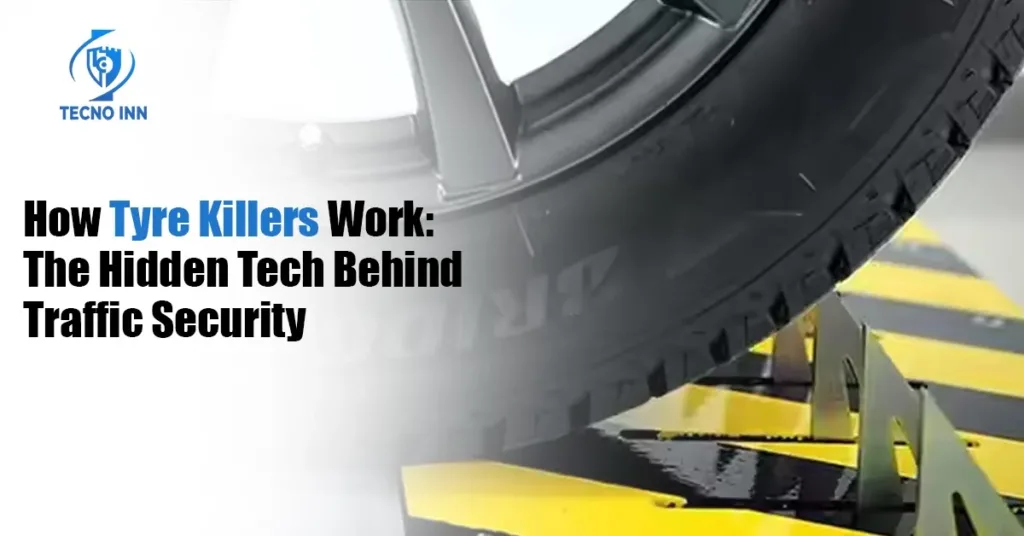
It works by using strong metal spikes that rise from the ground when activated. If a vehicle attempts to cross while the spikes are up, its tyres are punctured immediately, bringing it to a quick stop. When access is allowed, the spikes retract, letting vehicles pass safely.
Tyre killers are widely used in:
- Airports and defense facilities
- Government offices and embassies
- Industrial plants and warehouses
- Toll plazas and parking lots
- Corporate and private compounds
How Tyre Killers Work
The operation of a tyre killer depends on its design, manual, automatic, or hydraulic. But the basic function remains the same: control who enters and who doesn’t.
1. Detection and Activation
When a vehicle approaches, the system identifies whether it’s authorized. This can be done through:
- Access cards (RFID)
- Security guards
- Automatic Number Plate Recognition (ANPR) cameras
- Manual or remote control
If the vehicle is not cleared, the spikes stay up (or rise immediately), preventing entry.
2. Spike Movement
The spikes are usually made of high-strength steel. They are connected to a mechanism, often hydraulic or electromechanical, that moves them up and down.
- When Activated: The spikes lift within seconds, forming a physical barrier.
- When Deactivated: The spikes retract smoothly into the ground, allowing safe passage.
3. Integration with Other Security Systems
Modern tyre killers are part of a complete vehicle access control system. They can be connected to:
- Boom barriers for double-layer security
- CCTV cameras for real-time monitoring
- Traffic lights and alarms for visual and audio alerts
This ensures full control, even in high-traffic or sensitive zones.
The Technology Behind Tyre Killers
While tyre killers look simple, the technology inside them is advanced and precise.
Hydraulic Systems
Most high-security tyre killers in Pakistan use hydraulic power. This system allows smooth, fast, and powerful spike movement, perfect for stopping even heavy vehicles.
Electromechanical Systems
Used in medium-security sites, these rely on electric motors and gears. They’re cost-effective, energy-efficient, and suitable for commercial or residential areas.
Safety Sensors
To avoid accidents, many systems include safety sensors that detect vehicles or pedestrians before the spikes move. This ensures smooth and safe operation.
Weather Resistance
Because these systems are installed outdoors, they’re built to handle Pakistan’s heat, dust, and rain. High-quality models are made with galvanized steel and protective coatings to prevent corrosion.
Why Tyre Killers Are So Effective
Tyre killers are not just strong, they’re smart. Here’s why they’re trusted for vehicle security:
- Instant Response: They stop unauthorized vehicles immediately, reducing the risk of forced entry.
- Customizable Security: Available in different sizes, spike heights, and control systems to suit each facility.
- Low Maintenance: Once installed, they need minimal upkeep.
- Serves as a Warning Sign: Its clear design reminds drivers that entry without permission isn’t allowed.
- Easy Integration: Works with existing gates, barriers, and access systems for seamless operation.
Types of Tyre Killers
There are several types, each suited to different security levels:
1. Surface-Mounted Tyre Killers
Simple to install and ideal for temporary setups or low-traffic areas.
2. Flush-Mounted Tyre Killers
Installed level with the road, providing a clean and modern look. Common in commercial or high-traffic sites.
3. Hydraulic Tyre Killers
Used for the highest security zones. These can stop large vehicles moving at high speeds.
Each type plays an important role in creating a multi-layered security system that keeps both people and property safe.
Benefits for Pakistan’s Security Landscape
In Pakistan, where critical infrastructure and government facilities require strict protection, tyre killers have become a security essential. Their benefits include:
- Preventing unauthorized vehicle entry
- Controlling traffic in sensitive areas
- Enhancing safety at entry and exit points
- Reducing manpower needs
- Supporting 24/7 security operations
Whether in Lahore, Karachi, or Islamabad, these systems are now a key part of smart traffic management and perimeter defense.
Conclusion
Tyre killers may look simple, but the technology behind them is powerful and precise. They combine strength, automation, and intelligent control to stop unauthorized vehicles instantly, keeping facilities, people, and assets secure.
If your goal is to strengthen vehicle access control, installing a tyre killer system in Lahore is one of the smartest and most effective steps you can take.
FAQs
- How does a tyre killer stop vehicles?
It raises sharp spikes that puncture tyres if a vehicle tries to enter without permission. - Can tyre killers be automated?
Yes. Hydraulic or electric systems can automatically raise or lower the spikes when triggered. - Are tyre killers weatherproof?
High-quality systems are built to handle heat, rain, and dust — perfect for Pakistan’s conditions. - Do tyre killers require regular maintenance?
Only occasional checks are needed to ensure smooth operation and hydraulic fluid levels. - Can tyre killers work with other security devices?
Absolutely. They integrate easily with boom barriers, CCTV, and access control systems for complete automation.