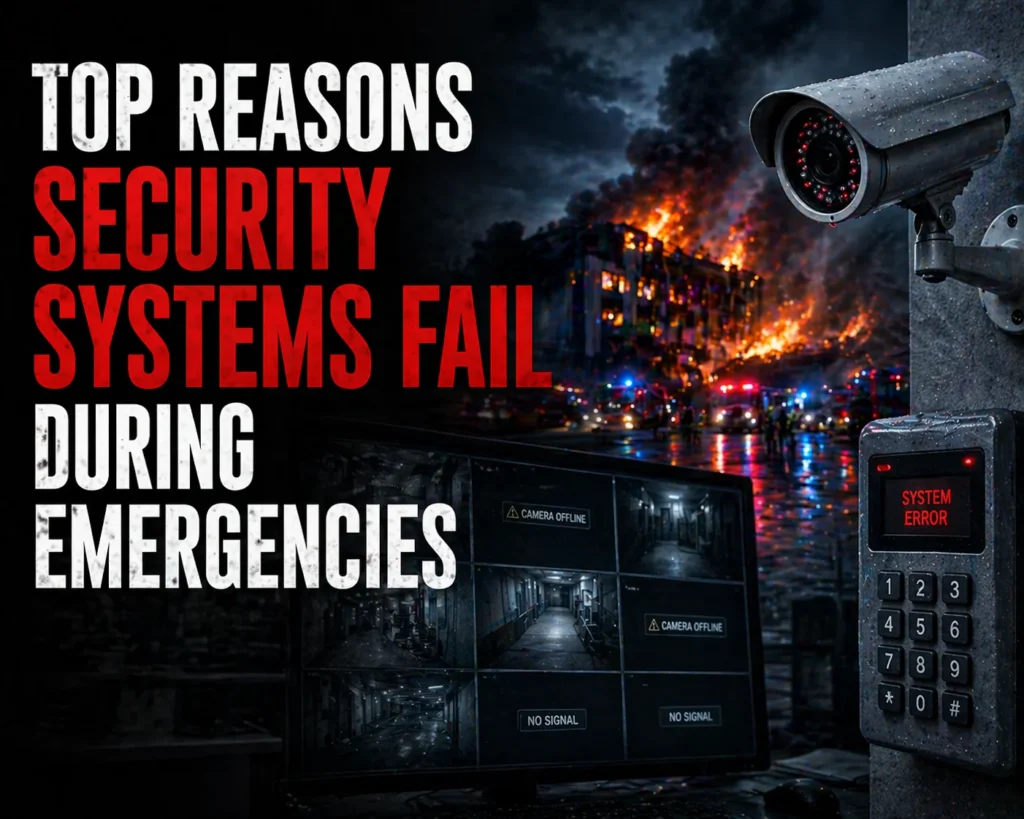
Have you ever wondered why security systems fail when you need them most? It’s a common and frustrating issue,during emergencies like fires, theft, or system breaches, even advanced setups can stop working. For homeowners and businesses in Pakistan, understanding these failures is crucial for safety and peace of mind. Many problems arise from poor installation, lack of maintenance, power outages, or outdated technology. In this guide, we’ll highlight the top reasons security systems fail during emergencies and share practical tips to help you prevent these issues and ensure your system works when it truly matters.
1. Poor Installation Practices
One of the biggest reasons security systems fail is improper installation. Even the most advanced CCTV cameras or alarm systems won’t work effectively if they’re not installed correctly.
Common issues include:
- Cameras placed at wrong angles
- Weak wiring or loose connections
- Sensors installed in ineffective locations
In Pakistan, many people rely on untrained technicians to cut costs, but this often leads to system failure during critical moments.
Tip: Always choose certified professionals for installation to ensure reliability.
2. Lack of Regular Maintenance
Security systems are not “set and forget” solutions. Over time, components wear out, batteries drain, and software becomes outdated.
Without maintenance, you may face:
- Dead backup batteries
- Dust-covered camera lenses
- Malfunctioning sensors
Regular servicing ensures your system stays ready for emergencies.
3. Power Failures Without Backup
In many parts of Pakistan, power outages are common. If your system doesn’t have a reliable backup, it becomes useless during blackouts.
Why this matters:
- CCTV cameras stop recording
- Alarm systems shut down
- Access control systems fail
Solution: Invest in UPS (Uninterruptible Power Supply) or solar backup systems to keep your security running 24/7.
4. Weak Internet Connectivity
Modern security systems rely heavily on internet connectivity for remote monitoring and alerts.
During emergencies:
- Live feeds may stop
- Alerts may not reach your phone
- Cloud storage access may fail
This is especially common in areas with unstable internet connections.
Tip: Use systems that offer offline recording or hybrid solutions combining local storage and cloud access.
5. Outdated Technology
Technology evolves quickly, and outdated systems may not handle modern threats effectively.
Risks of old systems:
- Low-resolution cameras (hard to identify intruders)
- Lack of AI detection features
- Vulnerability to hacking
Upgrading your system ensures better performance and improved security.
6. Human Error and Negligence
Even the best systems can fail due to human mistakes.
Common examples:
- Forgetting to arm the system
- Ignoring alerts
- Not updating passwords
In many cases, emergencies escalate simply because users didn’t respond in time.
Solution: Train users and set automated alerts to reduce reliance on manual actions.
7. Poor Integration Between Systems
Many homes and businesses install multiple systems,CCTV, fire alarms, access control,but they don’t always work together.
This leads to:
- Delayed responses
- Missed alerts
- Confusion during emergencies
An integrated system ensures all components communicate effectively for faster response times.
8. Environmental Factors
External conditions can also impact system performance.
Examples:
- Heavy rain or fog affecting cameras
- Heat damaging equipment
- Dust blocking sensors
In Pakistan’s diverse climate, choosing weather-resistant equipment is crucial.
9. Lack of Professional Monitoring
Some systems rely entirely on users to respond during emergencies.
The problem:
- You may be unavailable
- You might miss alerts
- Response time increases
Professional monitoring services ensure someone is always watching and ready to act.
10. No Emergency Planning
Even with a working system, lack of planning can cause failure.
Missing elements:
- No emergency response plan
- No backup communication
- No trained staff
A system is only as effective as the plan behind it.
Conclusion
Security systems are designed to protect you, but without proper installation, maintenance, and planning, they can fail when you need them most. By addressing issues like power backup, outdated technology, and human error, you can significantly improve your system’s reliability.
Investing in a well-designed and professionally managed security system isn’t just about technology,it’s about ensuring safety during critical moments.
For reliable and advanced solutions, contact Techno inn for trusted security systems in Pakistan.
FAQs
1. Why do security systems fail during emergencies?
Most failures occur due to poor installation, lack of maintenance, or power outages.
2. How can I prevent CCTV failure?
Regular maintenance, proper installation, and backup power solutions can prevent issues.
3. Do security systems work without the internet?
Some systems do, especially those with local storage, but remote access may not work.
4. How often should I service my security system?
At least every 6–12 months to ensure optimal performance.
5. Are modern security systems better than old ones?
Yes, newer systems offer better features like AI detection and improved reliability.
Call to Action
Don’t wait for an emergency to discover weaknesses in your security setup. Upgrade your protection today with professional solutions from Techno Inn and ensure your safety is never compromised.