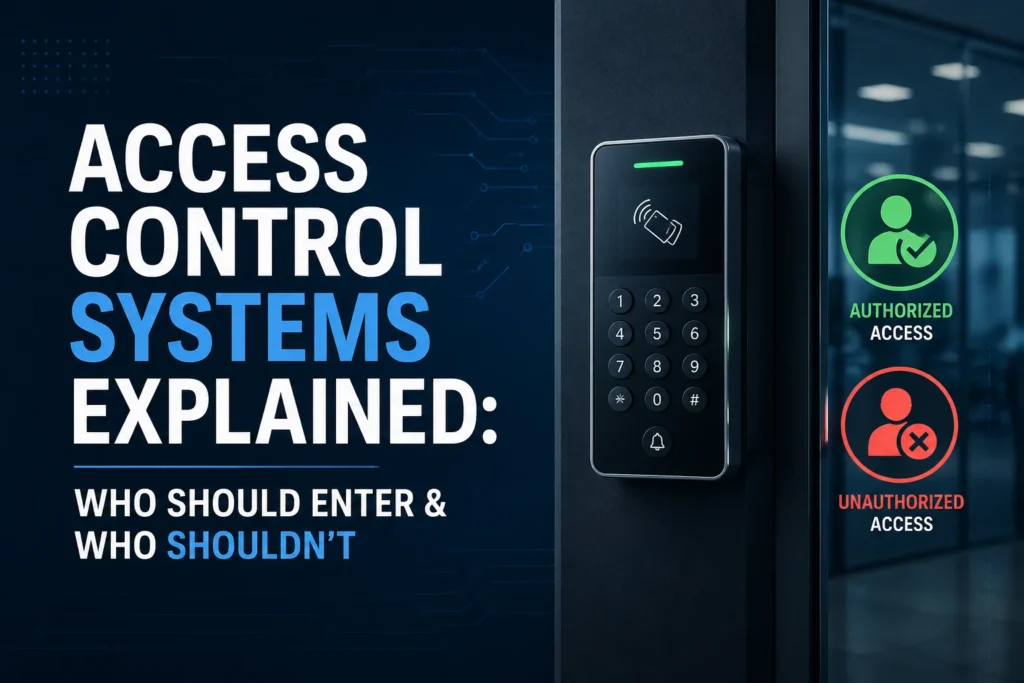
Have you ever wondered how businesses, offices, and secure facilities in Pakistan decide who is allowed in and who is not? In today’s world, where security threats and unauthorized access are real concerns, relying on traditional locks and keys is no longer enough. This is where access control systems come into play.
Whether it’s a corporate office in Lahore, a housing society in Karachi, or a factory in Faisalabad, modern access control solutions are helping organizations manage entry points more securely and efficiently.
What Are Access Control Systems?
An access control system is a security solution that regulates who can enter or exit a specific area. Instead of using physical keys, these systems rely on digital authentication methods.
Common types include:
- Biometric systems (fingerprint or facial recognition)
- RFID card access systems
- Keypad entry systems
- Mobile-based access control
These systems ensure that only authorized individuals can access restricted areas.
Why Access Control Matters in Pakistan
With growing urbanization and business expansion, security challenges in Pakistan are increasing. From corporate theft to unauthorized entry in residential communities, the risks are real.
Key reasons to use access control:
- Prevent unauthorized access
- Protect employees and assets
- Monitor entry and exit activity
- Enhance overall security management
Access control systems are no longer optional, they are essential for modern security.
How Access Control Systems Work
At their core, access control systems follow a simple process:
- User presents credentials (card, fingerprint, PIN)
- System verifies identity
- Access is granted or denied
Behind this process is a centralized system that stores data and manages permissions.
Key components:
- Access control panel
- Authentication device (scanner or reader)
- Software for monitoring and control
This combination allows real-time control over who enters and exits a facility.
Who Should Be Allowed Access?
One of the biggest advantages of access control systems is the ability to define access levels.
Authorized individuals may include:
- Employees
- Management staff
- Security personnel
- Approved vendors
Benefits of controlled access:
- Limits movement within sensitive areas
- Reduces internal security risks
- Ensures accountability
For example, not every employee needs access to server rooms or financial departments.
Who Should Be Restricted?
Just as important as granting access is restricting it.
Access should be denied to:
- Unauthorized visitors
- Former employees
- Individuals without proper credentials
- Suspicious or unverified persons
Modern systems allow instant updates, meaning access can be revoked immediately if needed.
Types of Access Control Systems
Different environments require different solutions.
1. Discretionary Access Control (DAC)
- Access is controlled by the owner
- Flexible but less secure
2. Mandatory Access Control (MAC)
- Strict, rule-based access
- Used in high-security environments
3. Role-Based Access Control (RBAC)
- Access based on job roles
- Most common in businesses
RBAC is widely used in Pakistan because it balances flexibility and security.
Benefits of Access Control Systems
Implementing an access control system in Pakistan offers multiple advantages.
Key benefits:
- Improved security and surveillance
- Real-time monitoring of entry and exit
- Reduced reliance on physical keys
- Easy management of access permissions
- Detailed access logs for audits
These systems not only protect physical spaces but also improve operational efficiency.
Common Applications in Pakistan
Access control systems are used across various sectors.
Popular use cases:
- Corporate offices
- Banks and financial institutions
- Educational institutions
- Hospitals and healthcare facilities
- Residential societies
From small businesses to large enterprises, access control is becoming a standard security measure.
Mistakes to Avoid When Choosing a System
Choosing the wrong system can lead to inefficiencies.
Avoid:
- Selecting outdated technology
- Ignoring scalability
- Overlooking integration with CCTV systems
- Choosing low-quality equipment
- Not training staff properly
Always invest in a system that can grow with your needs.
Why Professional Installation Matters
Installing an access control system requires technical expertise.
Professionals ensure:
- Proper system configuration
- Integration with existing security systems
- Reliable performance
- Ongoing maintenance and support
In Pakistan, working with experienced providers ensures long-term success.
Conclusion
Access control systems play a critical role in modern security by determining who should enter and who should not. In Pakistan’s rapidly evolving environment, these systems offer a reliable way to protect people, assets and sensitive areas.
By choosing the right system and implementing it correctly, businesses and organizations can significantly improve their security and operational control.
FAQs
1. What is an access control system?
It is a system that controls and monitors who can enter or exit a specific area.
2. Are access control systems expensive in Pakistan?
Costs vary, but they are a valuable investment for long-term security.
3. Which type of access control is most common?
Role-Based Access Control (RBAC) is widely used in businesses.
4. Can access be revoked instantly?
Yes, modern systems allow immediate updates and access removal.
5. Do access control systems work with CCTV?
Yes, they can be integrated for enhanced security.
Call to Action
Looking to secure your property with reliable access control systems? Explore advanced security solutions at Techno Inn and take control of who enters your space with confidence.