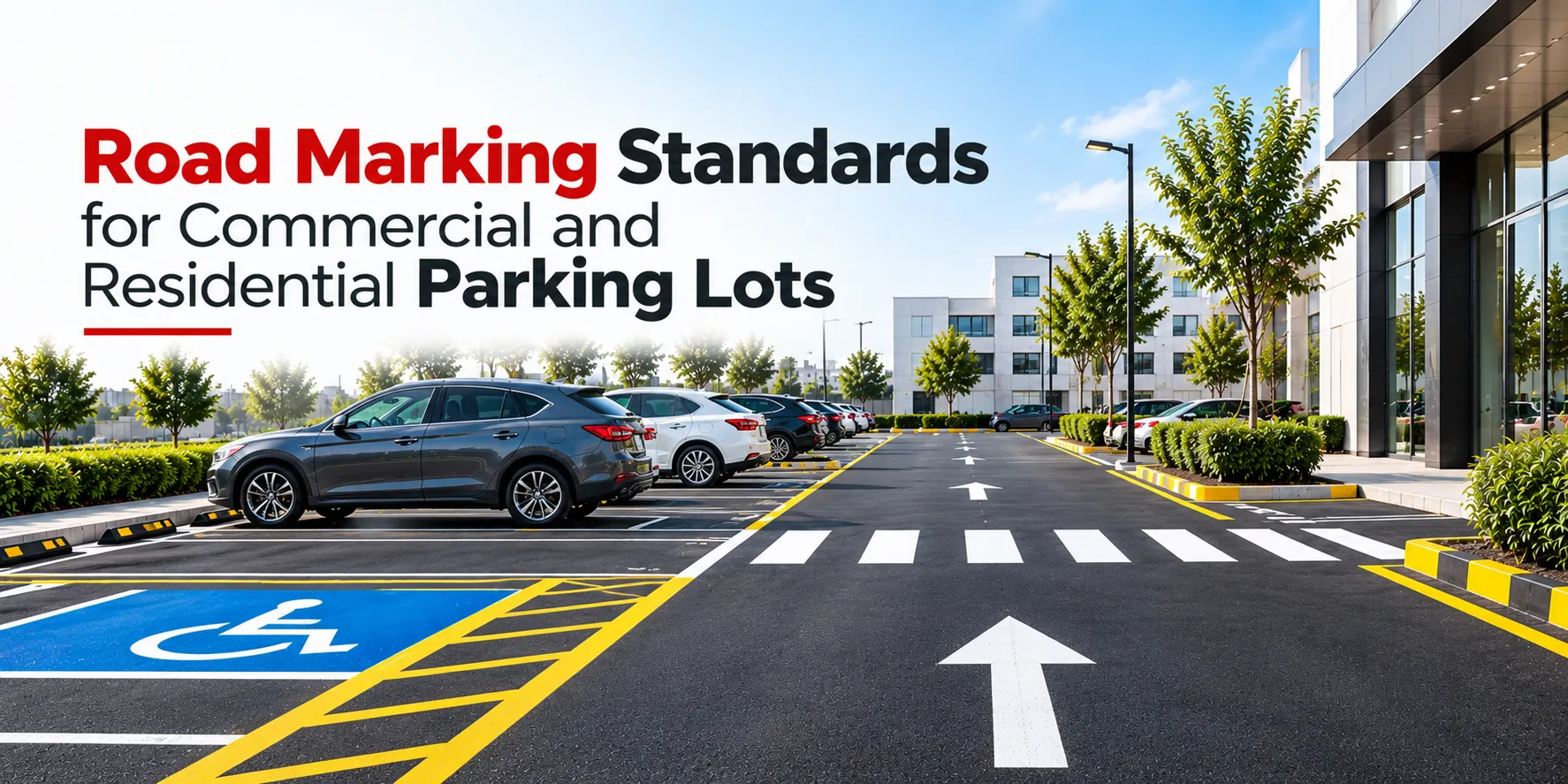
A well-organized parking lot depends on more than simply providing enough space for vehicles. Drivers need to understand where they should enter, stop, turn, cross, and leave. Clear road markings provide that visual structure and can make vehicle movement easier to understand in both commercial and residential environments.
Road marking is also broader than painting parking bays. Depending on the site, markings can identify traffic lanes, stopping points, pedestrian areas, directional movements, braking zones, and other parts of a vehicle-management system.
Techno-Inn provides road-marking solutions using thermoplastic, cold plastic, and preformed materials, with applications including road lines, arrow symbols, pedestrian crossings, braking zones, stop lines, turn arrows, and centre-line markings.
This guide explains how road markings can be planned for commercial and residential parking areas while keeping the focus on practical organisation, visibility, and safe movement.
What Are Parking Lot Road Markings?
Road markings are visual markings applied to roads, driveways, parking areas, and traffic zones to communicate how vehicles and pedestrians should move through a space.
In a parking facility, markings can help separate different movements and make the intended route easier for drivers to recognise.
Techno-Inn lists several road-marking applications, including:
- Road line marking
- Arrow symbols
- Highway road marking
- Stop-line marking
- Turn arrows
- Centre-line marking
- Pedestrian crossings
- Braking zones
The company states that these markings can help control traffic flow in highly trafficked areas and assist in preventing accidents and traffic congestion.
The exact layout should depend on the property’s design, traffic pattern, vehicle types, pedestrian activity, and applicable local requirements.
Why Road Markings Matter in Parking Areas
A parking lot can become confusing when there is no clear visual system.
Vehicles may enter from several directions, pedestrians may cross between parked cars, and drivers may need to make turns within relatively limited spaces. Without visible guidance, the movement of vehicles can become less predictable.
Properly planned markings can help:
Create Clear Traffic Movement
Directional arrows and lane markings give drivers a visual indication of how traffic is intended to move.
Identify Stopping Areas
Stop lines can establish a clear visual point where vehicles are expected to stop.
Separate Different Movements
Centre lines and other markings can help distinguish opposing or different traffic movements where appropriate.
Highlight Pedestrian Areas
Pedestrian crossings make designated crossing points easier for drivers and pedestrians to identify.
Improve Traffic Organisation
Techno-Inn specifically describes road markings as a means of helping control traffic flow in busy areas.
Road Markings for Commercial Parking Lots
Commercial parking facilities often experience a greater variety of vehicle movements than smaller residential areas.
Shopping centres, offices, commercial buildings, hotels, and other busy properties may have regular vehicle turnover throughout the day. Deliveries, visitors, employees, pedestrians, and service vehicles can also share the same overall environment.
For these locations, markings should be planned as part of the site’s wider traffic-management arrangement.
Directional Arrows
Directional arrows can communicate the intended direction of travel within a parking facility.
Where traffic follows a defined route, visible arrows can help drivers understand where they should proceed rather than relying entirely on signs or verbal instructions.
Stop Lines
Stop lines can identify locations where vehicles should stop before proceeding through a particular point.
Their usefulness depends on the site’s traffic layout and the reason vehicles are required to stop.
Turn Arrows
Turn arrows can help communicate where vehicles are expected to turn.
They can be particularly useful in larger facilities where drivers may otherwise be uncertain about the correct direction.
Centre Lines
Centre-line markings can help distinguish opposing traffic movements where the parking-area design requires them.
Pedestrian Crossings
Commercial parking areas frequently have pedestrian movement between vehicles and buildings. Clearly identified crossing areas can make these points easier for road users to recognise.
Road Markings for Residential Parking Areas
Residential parking areas may have fewer vehicles than large commercial facilities, but clear organisation is still important.
Housing developments, apartment complexes, residential societies, and shared parking areas can benefit from a simple marking system that helps residents and visitors understand how vehicles should move.
A residential parking plan may use markings to identify:
- Vehicle movement routes
- Turning areas
- Stop points
- Pedestrian crossing locations
- Parking-related boundaries
- Entry and exit movements
The objective should not be to cover the area with unnecessary markings. Instead, markings should communicate information that drivers actually need.
Common Types of Parking Lot Markings
Different markings perform different communication functions.
1. Road Line Marking
Line markings can visually organise movement areas and help establish the structure of a traffic route.
Techno-Inn lists road line marking among its road-marking applications.
2. Arrow Symbols
Arrows communicate direction and can help drivers follow the intended traffic route.
Techno-Inn offers arrow symbols as part of its road-marking solutions.
3. Stop Lines
A stop line provides a visible indication of where a vehicle should stop.
This can be useful at controlled points within a parking or traffic-management layout.
4. Turn Arrows
Turn arrows provide directional information before a turning point.
They can be used where drivers need additional visual guidance.
5. Centre Lines
Centre lines can separate traffic movements and make the route easier to interpret.
6. Pedestrian Crossings
Crossing markings identify designated areas where pedestrians and vehicles interact.
7. Braking Zones
Techno-Inn includes braking zones among the applications of its road-marking materials.
Choosing the Right Road-Marking Material
The marking material should be selected according to the environment, traffic conditions, surface requirements, and expected level of use.
Techno-Inn specifically identifies three types of material for its road-marking solutions:
Thermoplastic
Thermoplastic is one of the materials Techno-Inn lists for road-marking applications.
Cold Plastic
Cold plastic is another material offered for marking applications.
Preformed Materials
Techno-Inn also provides preformed marking materials.
The company describes these materials as solutions for durable braking zones, pedestrian crossings, and other markings intended to help control traffic flow in highly trafficked areas.
Rather than choosing a material based solely on appearance, property managers should consider the site’s traffic level, surface conditions, exposure, maintenance requirements, and the intended application.
Road Markings and Pedestrian Movement
Parking lots are shared spaces. Drivers are not the only people using them.
Pedestrians may walk from parked vehicles to offices, shops, apartment buildings, entrances, or other facilities. This creates points where vehicle and pedestrian movements overlap.
Clearly identified pedestrian crossings can help make these locations more recognisable.
For commercial facilities, pedestrian movement should be considered when deciding where markings are needed. For residential developments, the same principle applies around building entrances, shared walkways, visitor parking, and other areas where people regularly cross vehicle routes.
Road markings should complement the site’s overall pedestrian-safety arrangement rather than being treated as a standalone solution.
Improving Visibility in Parking Areas
A marking system is only useful when people can recognise it.
Visibility should therefore be considered when planning road markings.
Several other parking products offered by Techno-Inn can complement a marking system.
For example, aluminium road studs are listed for use in urban roads, expressways, shopping malls, hospitals, gas stations, streets, and parking lots. Techno-Inn states that these studs can also be used as road separators and lane regulators and that reflective elements help provide visibility from vehicle headlights.
This means markings do not necessarily have to work alone. Depending on the site, reflective road-safety equipment can provide additional visual guidance.
Combining Markings with Other Parking Equipment
Road markings communicate information, while other parking products can provide physical control or protection.
Techno-Inn’s parking-equipment range includes several products that can work alongside a properly planned marking system.
Car Stoppers
Car stoppers provide a physical stopping point for vehicles within parking areas.
They can be useful where a vehicle needs a defined stopping position, particularly near structures.
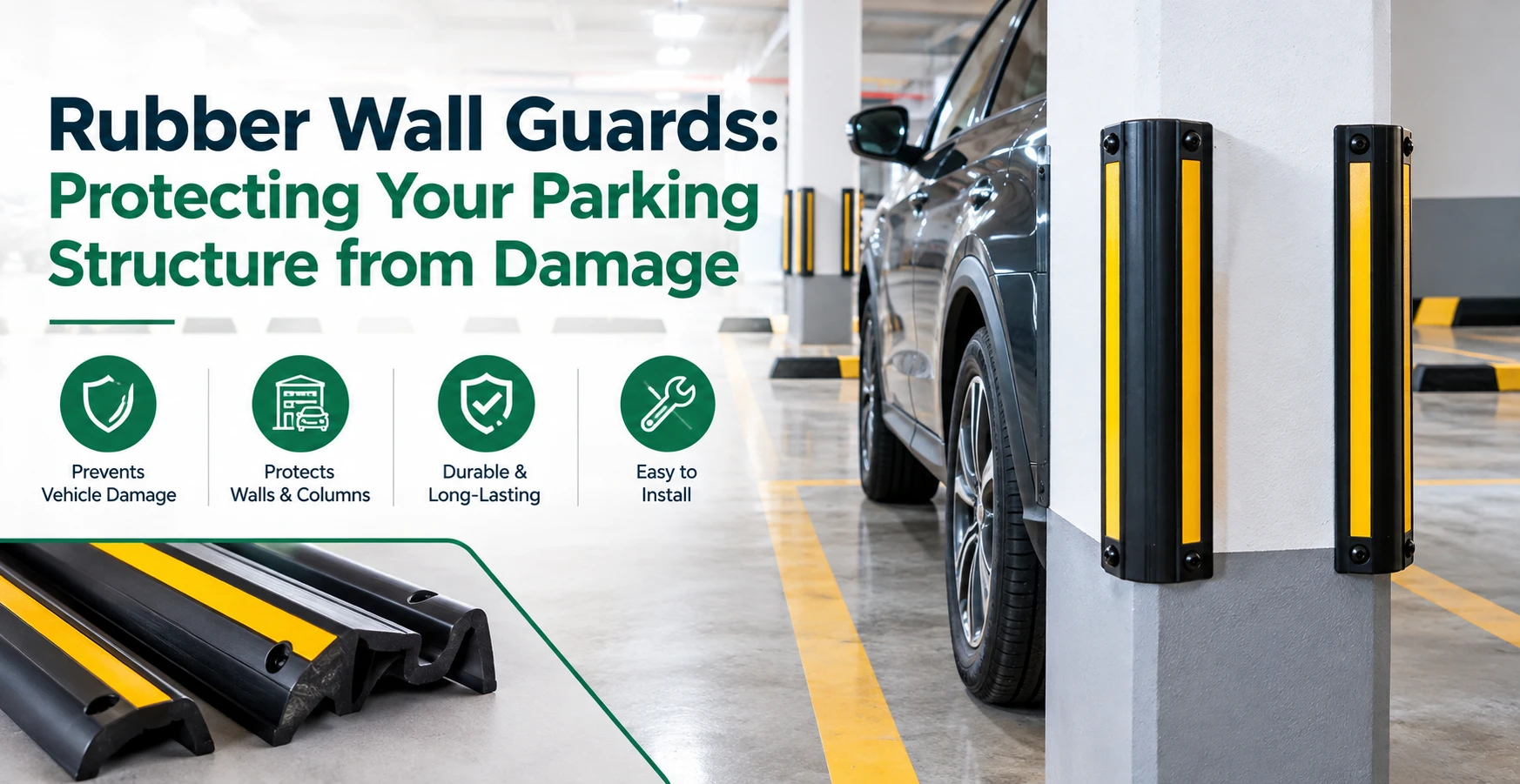
Rubber Wall Guards
Rubber Wall Guards are designed to protect vehicles, walls, and columns in parking lots, traffic areas, and service areas.
Speed Breakers
Speed breakers are used to slow vehicle traffic through vertical deflection. Techno-Inn describes them as products intended to improve safety conditions by reducing vehicle speed.
Aluminium Studs
Aluminium road studs can provide additional visual guidance and can be used as road separators or lane regulators.
The important point is that these products perform different functions. A road marking should not be expected to perform the job of a physical stopper, speed-control device, or protective guard.
Commercial vs Residential Parking Markings
Although the basic principles are similar, the marking strategy can differ between commercial and residential properties.
| Consideration | Commercial Parking | Residential Parking |
| Traffic volume | Often higher and more varied | Usually lower and more predictable |
| Vehicle types | May include visitors, deliveries and service vehicles | Primarily residents and visitors |
| Directional guidance | Often more extensive | Usually simpler |
| Pedestrian activity | Can be significant | Depends on the development |
| Stop and turn guidance | Useful in complex layouts | Used where the layout requires it |
| Traffic-control equipment | May be needed at busy points | Depends on site requirements |
These are planning considerations rather than fixed regulatory standards. The correct arrangement should always be based on the property’s actual layout and applicable local requirements.
Common Road-Marking Mistakes
Even a good marking system can become ineffective when it is poorly planned or maintained.
Using Too Many Markings
More markings do not automatically mean better traffic management. Excessive visual information can make a parking area harder to understand.
Ignoring Traffic Flow
Markings should reflect how vehicles actually move through the property.
Forgetting Pedestrians
A parking design that considers vehicles but ignores pedestrian movement can leave important crossing points unclear.
Choosing Materials Without Considering the Site
Different marking materials have different characteristics. The expected traffic, surface conditions, environment, and application should all be considered.
Letting Markings Become Difficult to See
Faded or damaged markings can lose their usefulness. Regular inspection should therefore be part of parking-area maintenance.
Treating Markings as the Entire Safety System
Lines and symbols are only one component of parking management. Depending on the facility, other equipment may be required to address speed, vehicle stopping, visibility, or structural protection.
Maintaining Parking Lot Markings
A road-marking system needs periodic attention after installation.
Property managers should inspect markings for:
- Fading
- Surface wear
- Damage
- Loss of visibility
- Changes in traffic patterns
- Areas where the existing layout no longer matches how the property is being used
Maintenance requirements will vary according to traffic volume, weather exposure, surface conditions, and the material selected.
If the use of a property changes—for example, if a residential area becomes significantly busier or a commercial facility changes its entrance arrangement—the marking layout may also need to be reviewed.
How to Plan a Better Parking Marking System
Before installing new markings, consider the parking area as a complete movement system.
Step 1: Understand the Site
Identify entrances, exits, parking areas, pedestrian routes, turning points, and areas where vehicles regularly stop.
Step 2: Identify Traffic Problems
Look for locations where drivers become confused, vehicles cross paths unnecessarily, or pedestrians and vehicles frequently interact.
Step 3: Select Necessary Markings
Choose only the markings that communicate useful information, such as directional arrows, stop lines, centre lines, or pedestrian crossings.
Step 4: Select Appropriate Materials
Consider the site’s conditions and traffic requirements when choosing between thermoplastic, cold plastic, and preformed marking materials.
Step 5: Consider Complementary Equipment
Where appropriate, combine markings with road studs, car stoppers, speed breakers, or protective equipment.
Step 6: Plan for Maintenance
Create an inspection routine so that damaged or poorly visible markings can be addressed before they become ineffective.
Final Thoughts
Good parking-lot markings do more than make a surface look organised. They provide visual information that helps drivers understand where to travel, stop, turn, and interact with pedestrian areas.
For commercial facilities, markings can help manage more complicated traffic movements and higher vehicle activity. Residential parking areas may require a simpler arrangement focused on clear access, organised vehicle movement, and pedestrian awareness.
Techno-Inn’s road-marking solutions include thermoplastic, cold plastic, and preformed materials, with applications such as road lines, arrows, stop lines, turn arrows, centre lines, pedestrian crossings, and braking zones.
The most effective parking layout is not necessarily the one with the greatest number of markings. It is the one where every important marking has a clear purpose and works together with the site’s wider traffic and safety equipment.
For properties that need additional parking protection or guidance, Techno-Inn also provides products such as aluminium road studs, car stoppers, speed breakers, and rubber wall guards.
FAQs
What is the purpose of road markings in a parking lot?
Road markings provide visual guidance for vehicle and pedestrian movement. They can identify routes, stopping points, turning movements, centre lines, pedestrian crossings, and other traffic-control areas.
What types of road markings does Techno-Inn provide?
Techno-Inn lists road line markings, arrow symbols, highway road markings, stop lines, turn arrows, centre lines, pedestrian crossings, and braking zones among its road-marking applications.
Which materials are used for Techno-Inn road markings?
Techno-Inn states that its road-marking solutions use thermoplastic, cold plastic, and preformed materials.
Are the same markings suitable for commercial and residential parking?
Not necessarily. The appropriate marking arrangement depends on traffic volume, site layout, pedestrian movement, vehicle types, and applicable requirements. Commercial facilities may need more extensive directional guidance than a smaller residential parking area.
Can road studs be used with parking-lot markings?
Yes. Techno-Inn lists aluminium road studs for parking lots and describes them as usable for road separation and lane regulation, with reflective elements intended to improve visibility.
Are road markings enough to control parking-lot safety?
No. Markings are one part of a broader parking-management system. Depending on the site, equipment such as car stoppers, speed breakers, road studs, and rubber wall guards may also be appropriate.
How often should parking-lot markings be maintained?
There is no single maintenance interval that applies to every parking lot. Inspection frequency should depend on traffic, weather, surface conditions, marking material, and visible wear. Markings should be reviewed whenever they become difficult to see or no longer reflect the site’s traffic arrangement.
Need a Parking and Road-Safety Solution?
Techno-Inn provides road-marking and parking-equipment solutions for facilities that need clearer traffic organisation and improved vehicle guidance.
Explore the Techno-Inn Road Marking solutions to learn more about available marking materials and applications.
You can also explore Aluminium Road Studs, Car Stoppers, Speed Breakers, and Rubber Wall Guards when planning a broader parking-safety system.